rss-feed
Event

banner_museum

Opening days and hours: Mon. and Wed. from 11am to 2pm. Thurs. and Sat. 1pm-4pm. Closing: 31.2.12 | Sala-Manca performs every Monday at 13:00 and every Saturday at 14:30 | Free entrance
With the support of the Russel Berrie Foundation through the Jerusalem Foundation , Hazira Habeintchumit and the Ministry of Culture.


On saturday 21.1.2012, two performnaces:

14:30 Temple of Contemporary | Performance by Sala-Manca

15:00 Performance by Jason Lim (singapur)

Jason Lim was born in Singapore in 1966. He studied at Central St Martins College of Art & Design. He’s repertoire of works encompasses ceramics, video art, installation art and performance art. He has organized and created various platforms for alternative art practitioners to meet and collaborate. In 2007 he presented Just Dharma and Light Weight at the Singapore Pavilion in the 52nd Venice Biennale.He is the Artistic Director of Future Of Imagination 7 – International Performance Art Event in Singapore 2011.
==
The Museum of the Contemporary


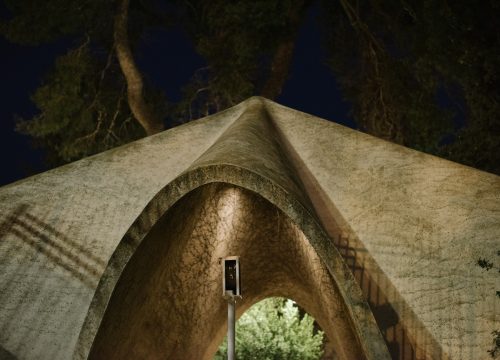
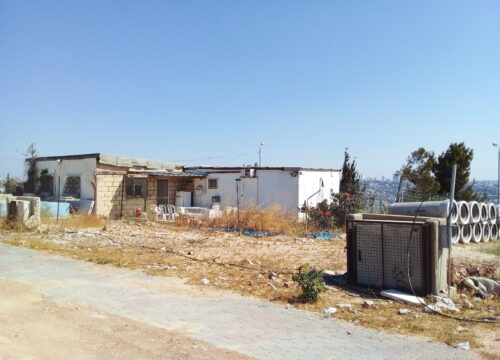
The first exhibition produced at the Museum of the Contemporary’s physical space is an exhibition of Sala-Manca group The exhibition  features new sculptures, sound works and performances created especially for the exhibition, in conjunction with works created in collaboration with Hadas Ophrat, Wanja Shaub, Mamuta collective and MamutaEduLAb. The exhibited works serve as a comment on local history, urban politics and the architectural structure in which the exhibition is held – an Arab house in Ein Karem located midway along the pilgrimage trail to the Church of the Visitation. The building was declared absentee property by the State of Israel in 1948 and purchased by the artist Daniela Passal in 1972 who later donated it towards the establishment of an art centre - the Mamuta at the Daniela Passal Art and Media Centre, which have been operating on site since October 2009.
Opening days and hours: Mon. and Wed. from 11am to 2pm. Thurs. and Sat. 1pm-4pm. Closing: 31.2.12
With the support of the Russel Berrie Foundation through the Jerusalem Foundation , Hazira Habeintchumit and the Ministry of Culture.

Event News

Visitor Hours: Monday and Wednesday 11:00-14:00; Thursday and Saturday 13:00-16:00

Every Saturday at 14:30 and Monday 13:00: live performance by Sala-Manca

Free Entrance

contempo_museum_f2-copy2

The Museum of the Contemporary - Grand Opening
Opening of Sala-Manca exhibition
Saturday 31st December 2pm-5pm
performances by Uri Katsenstein and Revital Topiol; Sala-Manca

“If Mount Herzl is the mountain of remembrance or the mountain of Zionist historical consciousness, by way of the line stretching between Yad Vashem and Israel’s national cemetery, then in the topography of Israeli remembrance, Ein Karem is the wadi of oblivion or the valley of Zionist historical subconscious. The New Museum of the Contemporary constitutes a new point on the map of institutions of Israeli consciousness, illustrating its three-dimensional triangle. Of the three points, the museum is the deepest point.” (Rodriguez, from the curatorial text of the museum’s inaugural exhibition)

The first exhibition produced at the Museum of the Contemporary’s physical space is an exhibition of Sala-Manca group. This is the group’s first exhibition since 2006. The exhibition will feature new sculptures, sound works and performances created especially for the exhibition, in conjunction with works created in collaboration with Hadas Ophrat, Wanja Shaub and Mamuta collective. The exhibited works serve as a comment on local history, urban politics and the architectural structure in which the exhibition is held – an Arab house in Ein Karem located midway along the pilgrimage trail to the Church of the Visitation. The building was declared absentee property by the State of Israel in 1948 and purchased by the artist Daniela Passal in 1972 who later donated it towards the establishment of an art centre - the Mamuta at the Daniela Passal Art and Media Centre, which have been operating on site since October 2009.
Free Arab Language Lessons
10 meetings. From the beginning of January. For more info and inscription: prod@mamuta.org

The Collection - The Storage Room
The collection features complete exhibitions that are available for download, which underwent a process of digitalization so as to gain their full quality after they have been downloaded in their respective formats (video, sound, photography, text etc.). After they have been downloaded, the exhibitions could then be displayed in the venues available to the secondary curators (those who chose to download the exhibitions) and the conditions they have at their disposal. The same exhibition could be displayed simultaneously by agents of completely dissimilar nature and financial means: as the exhibition will be displayed differently, and convey cultural and curatorial perceptions that reflect not only the perception of the exhibition’s curators, but also those of the secondary curators displaying it.

Calls & Opportunities News

Mamuta at the Daniela Passal Art & Media Center

Call for Applications for Artist’s Workspace

Deadline:15.12.11 - Expected entrace: End of January 2012

Visual artists,  sound artists, designers, architects, curators, and researchers in the arts, are invited to submit applications for a workspace at Mamuta.

Recipients of the workspace will be entitled to the following:

  • A workspace in the open studio or in the labs
  • Access to video, sound, and electronics labs; wood workshop
  • Opportunity to participate in Mamuta’s enrichment workshops for a nominal fee
  • Support and professional guidance on technical and artistic matters
  • Encounters with artists, curators, and researchers from Israel and abroad
  • Funding opportunities for project development.

Mamuta’s expectations of participating artists:

  • Attendance at your workspace at least  16 weekly hours
  • Readiness to conduct artistic dialogue with guests and residents of the house
  • Participation in the development of the Mamuta Project
  • Eagerness to take part in artistic projects produced by the Center

In order to submit your application, please fill in the following form:


For workspace requests, please designate the projected time periods: - Number of months requested for the project (till 6 months - after that it will be possible to apply for an extension).
Attached Files
Click Send to submit your application: 

To send video please do it or by post or via YOUSENDIT.com  (more details here).

For further information please contact us

Submissions deadline for first committee: Decenber  15, 2011

  • Earliest entrance date: January 15, 2012


*Please note that applications may be submitted throughout the year. The applications review committee, comprised of people from the artistic field, meets once every six months.

About the Mamuta Project

The Mamuta Project at the Daniela Passal Art & Media Center is a center for artistic creation, encounters, research, and display of art. The Center is comprised of artists’ workspaces; video, sound, and electronics labs; guest apartments; and a wood, metal, and plastics workshop. The goal of the project is to advance individual art projects and to create a forum for artists from different media, as well as curators, architects, designers, and researchers, who wish to create in the spirit of cooperation, dialogue, and technological innovation.

Mamuta at the Daniela Passal Art & Media Center offers guidance and support for the development of its artists’ individual projects, and initiates and produces projects at the Center (El-Dan House, Ein Kerem) as well as at other sites in and outside of Jerusalem—in cooperation with institutions and individuals in Israel and abroad. The project is dedicated to creating conditions for developing an active community of artists, allowing for personal development alongside collaborative work, through an engagement with the place and time.

Mamuta is a collaborative project of Sala-Manca Group and the Jerusalem Foundation


The Daniela Passal Art & Media Center, El-Dan House, 59 Madregot Habikur Street, Ein Kerem

Event

Closing date: Saturday 19.11 - It will be open from 12:00 till 20:00

kav-flyer-hebrew

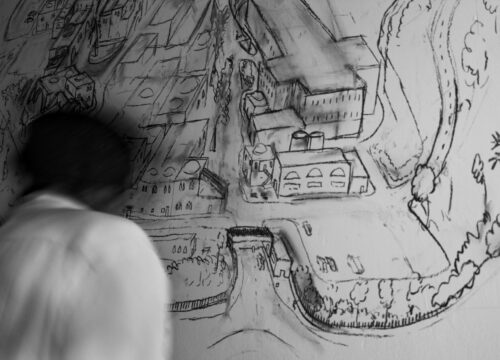
Line - Einat Amir and Guy Yitzhaki

curators: sala-manca

The living room is wall-papered with drawings. A projection
onto the drawings creates a hybrid image. In the space
between the projection and the drawing, strings diverge and
converge, transforming into a three-dimensional image that
changes with the projection. Elsewhere, on the living-room
floor, a projected drawing is thickened by drops of water.
The scenery changes as in a nighttime stroll through the
forest out of a Japanese animated film.
In the library, a book of sketches by Einat and Guy converses
with Illuminated Manuscripts by David Small. As the
spectator browses through the book, the drawings projected
onto it change. They are like memories of digital sketches
from a different place—a combination of the manual craft
and the digital craft. The exhibit is rounded out by Einat’s
drawings, hung in the living-room of the house.
The joint exhibition, Line, was commissioned by Mamuta in

order to bring to fruition the potential of dialogue between
the two artists, which began about two years ago when they
began their residencies in the Center’s shared studio space, and continued with various projects (see the interview with Jan Tichy). It was a successful realization of Mamuta’s choice not to place walls between the studio spaces. Their dialogue
stemmed from Einat’s curiosity about new media and from her desire to penetrate the world of programming and the projected image, which is Guy’s artistic world. Einat feels that with these media she will be able to deepen the investigation of the dimension of time in her own work. For his part, Guy believes that the encounter with the materiality of Einat’s works can broaden his own experimental style—
which entails the creation and projection of images through algorithms that react to physical structures. Their collaboration creates a unique language, combining
two different semiotic systems—that of drawing, craft, and text, and that of the digital image. Thanks to its precision, the connection is fascinating, poetic, and challenging.
The exhibit is the culmination of a year and a half of work at Mamuta, in which the two artists began to develop their common language. Line is the first closing of a circle. This  point is only a beginning.
Lea and Diego (Sala-Manca group)
Curators and directors of Mamuta at the Daniela Passal Art
and Media Center

Opening: 29/10  - Closing: 19/11

Event

the-food-will-run-out

Saturday 29/10

The Exhibition “Line” by Einat Amir and Guy Ytzhaki opens at 19:30. Dinner starts at 19:42.  The Food will run out at 20:00 (even earlier). Once the food is finished three new performance works by artists in residency at Mamuta will take place. Li Lorian with “Waiting” : the feeling of longing between a landscape-installation at the studio and the act of embroidering at the balcony.  “Toy” by Ayelet Lerman with the collaboration of Amir Bolzman  : an acoustic sound performance of a tin chimney with digital sound mediated by membrane.  David Opp ” Ritual for a Dancer and Machines”: a dancer operates noise machines by moving in space, creating a realtime soundtrack . 22:15 out of drinks


for opening days and hours of the exhibition and further info please visit

http://mamuta.org/?p=2237

kav-flyer-hebrew

Event

haus-am-germ-e-flyer

Monday 24th October, 19:30

Custom Creates Law

When does custom create laws?  Customary law is a recognized source of ruling within jurisdictions of the civil law tradition, but because it is not based on reasoned decision-making, it can become subject to discussion and interpretation. What does this mean in today‘s Israel? A state that knows both a consistent legal system and the Halakha, the jewish law, which affects every aspect of religious and nonreligious life. Not to mention the Law of Nations (the legal norms that have developed through the customary exchanges between states over time, whether based on diplomacy or aggression), that guarantees on one hand the State of Israels’ right to exist, but describes on the other hand the borders in which it has to exist.
Invited by Mamuta at the Daniela Passal Art and Media Center and part of Culturescapes Festival in realizing an artwork in public space, the artist couple Barbara Meyer Cesta and Rudolf Steiner from Switzerland (aka „Haus am Gern“) will be dealing with the topics of custom, laws and the transgression of borders in a simple but ambiguous way.
They will also talk about their former works.
Haus am Gern are artists in residency at Mamuta at the Daniela Passal Art and Media
Center.

http://www.hausamgern.ch/

The residency in the frame of Culture Scapes Swiss 2011 and with the support of Pro-Helvetia.

The Evening will be in English

News

shanatova_mamuta20111

Calls & Opportunities Event

middle_a5_enExhibiting artists: Itamar Rose & Yossi Atia, Ronen Eidelman, Rafał Jakubowicz, Damir Nikšić, Michal Rivlin , Wolfram P. Kastner, Tamara Moyzes & Shlomi Yaffe

Curators: Tamara Moyzes, Zuzana Štefková
Openning: 14.9.2011, 20:00
September 14-27, 2011 || Open: Mon and Tue: 10 am – 2 pm || Tue and Wed: 2 pm – 5 pm

The exhibition Middle East Europe brings together works by Israeli and Central European artists reacting to the Israeli-Palestinian conflict and the ideas of statehood and identity. The project tackles the themes of conflict and otherness as well as the possibilities of overcoming the differences. The reactions to these issues include a scale of approaches ranging from a detached deconstruction of the media image to a personal position regarding the identity of the artist.
The exhibition Middle East Europe in Mamuta at the Daniela Passal Art & Media Center is one part of a larger project consisting of a series of exhibitions, second of which will take place in Bethlehem Peace Center in November 2011. Another planned event is a projection of videos onto the separation wall in the Palestinian village Al-Walaaja. Finally modified version of the project will then be shown in the Center for Contemporary Art DOX Prague, Labor Gallery Budapest, Szara Gallery Cieszyn (Poland), and SPACE Gallery in Bratislava (Slovakia).
The exhibition is organized by C2C Circle of Curators and Critics and kindly supported by European Cultural Foundation

About the works:

Damir Nikšić (BiH) “Muslim European Flag” (Installation, 2011), The Political Sacrilegion (2010, Video)
The project Nationality as idea as art of Damir Nikšić concerns the creation of nation and its relation to the manifestation of power. In the texts accompanying his projects he uses language borrowed form the context of human reproduction to stress the parallel between the human procreation and the birth of a nation. Nikšić exemplifies this parallel using words like eugenics, sterilization, castration, and vasectomy to imply the physical impact on the collective living body of a community of Muslims living in Europe today.
Rafał Jakubowicz (PL) 1948 T-shirt (2011, Installation)
The project is inspired by the original t-shirt from Palestinian Nakhba demonstrations and comprises of two sets (”stacks”) of specially produced black t-shirts. There are two “aisles” of standard shop racks. On one rack – the original Nakhba t-shirts, on the other – the same t-shirts with reversed colours of the lettering (1948: 194-red and 8-white). The visitors are turned into shop clients and can make their choice between the two. 1948 – from the point of view of Palestinians and Israeli Arabs it could be the beginning of the national tragedy while from the point of view of Israeli Jews it could be the end of their national tragedy.

Itamar Rose & Yossi Atia (IL) “The Jewish Arab State, Video” (Video)
Yossi and Itamar head to the Palestinian town of Taybeh, to ask its citizens about a future Arab-
Jewish State. As a new unified citizenry, the identity of the “other” must be re-established with new scapegoats and enemies, those that everyone can hate together.

Shlomi Yaffe (IL) and Tamara Moyzes (CZ) “Redemption of Zion (Video and Installation, 2011)
The project deals with the imaginary integration of Israel into the European Union. This provocative plan is introduced as a possible resolution to the conflict in the Middle East and Israel, confronts the hopes, fears, ideals, and indifference of citizens of both countries. The survey on the possible integration of Israel into Europe embodies a number of levels; it shows various mystifying documents that verify the Israeli-European contract, the foundation of the Euro with an Israeli motive, or artifacts such as the EU Israeli passport, as well as surveys and performative readings of the project‘s manifest. The authors of this particular plan for peace in the Middle East suggest that for decades Israel considers itself to be an inseparable part of European culture. It thus comes as no surprise that many representatives of the Israeli state would like to affirm their pertinence with Europe also politically. On the other hand, as those who defend ethnical homogeneity of the Jewish state point out, Israeli membership in European Union would enable the return of Palestinians living in Europe to Israel. The survey shows the fear of the downfall of the Jewish state.
Ronen Eidelman (IL) “Medinat Weimar” (Installation, Ongoing project)
Eidelman is challenging boundaries – national, political and artistic – with his project to create a Jewish state in the former East Germany. By this gesture he raises questions about national identity, anti-Semitism and the complex relationship involving Germany, Jews and Israel. With banners, flags and a mini-constitution, Eidelman is “looking for provocation as a tool to talk about truths and taboos that otherwise would not be touched: anti-Semitism and criticism of Israel.”

Wolfram P. Kastner “Do Not Die – Come To Germany ” (An Invitation, 2011)
Kurt Tucholsky wrote: “All soldiers are murderers.” But we close our eyes and do not see the effects of wars. German and European history is the root of the conflict in the so-called Middle East. There is a strong German and European responsibility for the past and the future. Finally in 2011, the German government accepted this and invites all the children and young Israeli and Palestinian people to come to Germany. They will get a residence permit until there is a genuine peace realized in their home countries.

Michal Rivlin  “Checkpoint” (Performance at the opening, 2011)
A modest religious woman, dressed in a mixture of Jewish and Arabic style clothes is present during the opening. She moves from the toilet to the bar and the gate. Using strategies of language and gestures, she instructs visitors to choose their gender (toilet), to drink to the revolution (bar), and inspects whether they took anything from the exhibition (gate). A modest woman, as a figure of otherness in a contemporary art gallery, and a common silent member for both Arab and Israeli cultures, creates zones of reconsideration of everyday’s rituals-checkpoints that serve as individual doors to the urgent political changes.

Event News

TILL  Saturday 20.8.2011reshimu_solo-exhibition_tamar-shippony

Calls & Opportunities Event

click image to enlarge

reshimu_tamar-shippony_invite

Reshimu is Tamar Shippony’s first solo exhibit, the product of a year and a half of work as a resident artist in the spaces of Mamuta. The exhibit is comprised of sculptural and textual works, a telescope-like sculptural installation in which the viewer becomes viewed, a kinetic installation in which the contents and remains of the books that Shippony sculpted create a new work, and video installations dealing with disassembled time and memory.

The viewer’s experience, strolling in one of the most fascinating houses in Ein Karem, turns into a multi-layered experience, where the time-gap becomes palpable, unresolved, and inviting for more visits.

Link to the catalogue (pdf version)
Conversation between Tamar Shippony and Talia Keynan (from Reshimu’s catalogue) [click here]
Curators: Sala-Manca Group

"Reshimu" - Tamar Shippony's First Solo Exhibition

Music Performance at the opening: Tethys
“If the waves of the sea lapped against the slopes of Jerusalem, Ein Karem would be the first place to turn into a fishing village for a moment”.
HAWARO: Oded Aloni, percussion; Yarden Erez, acoustics and electronic instruments