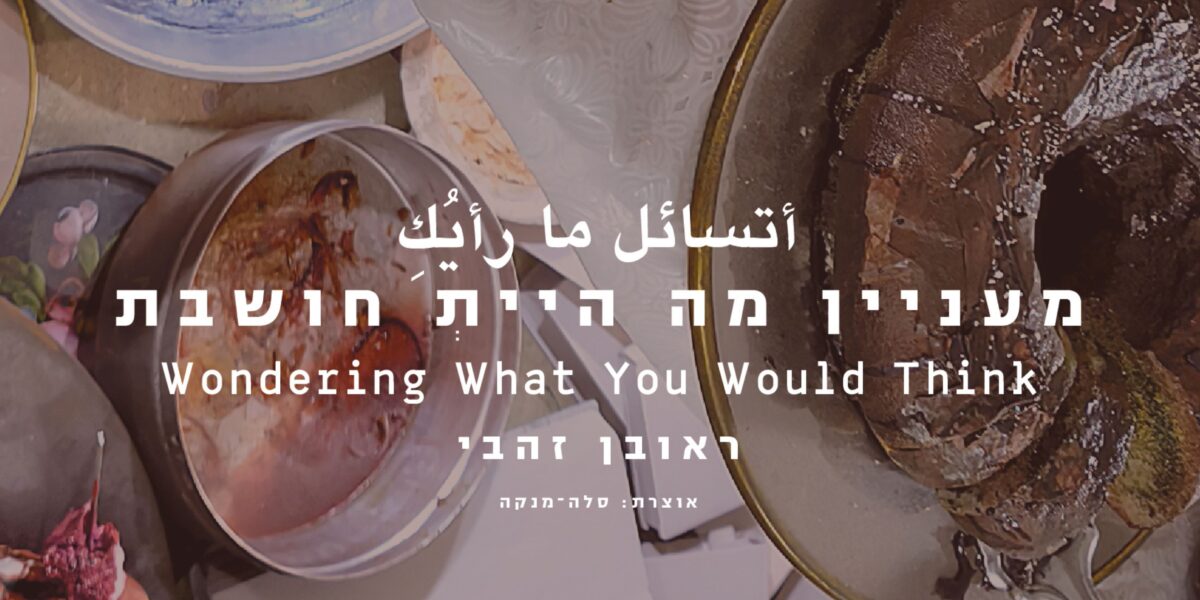
Reuven Zahavi
Curator: Sala-Manca
10.04.26 - 26.06.26
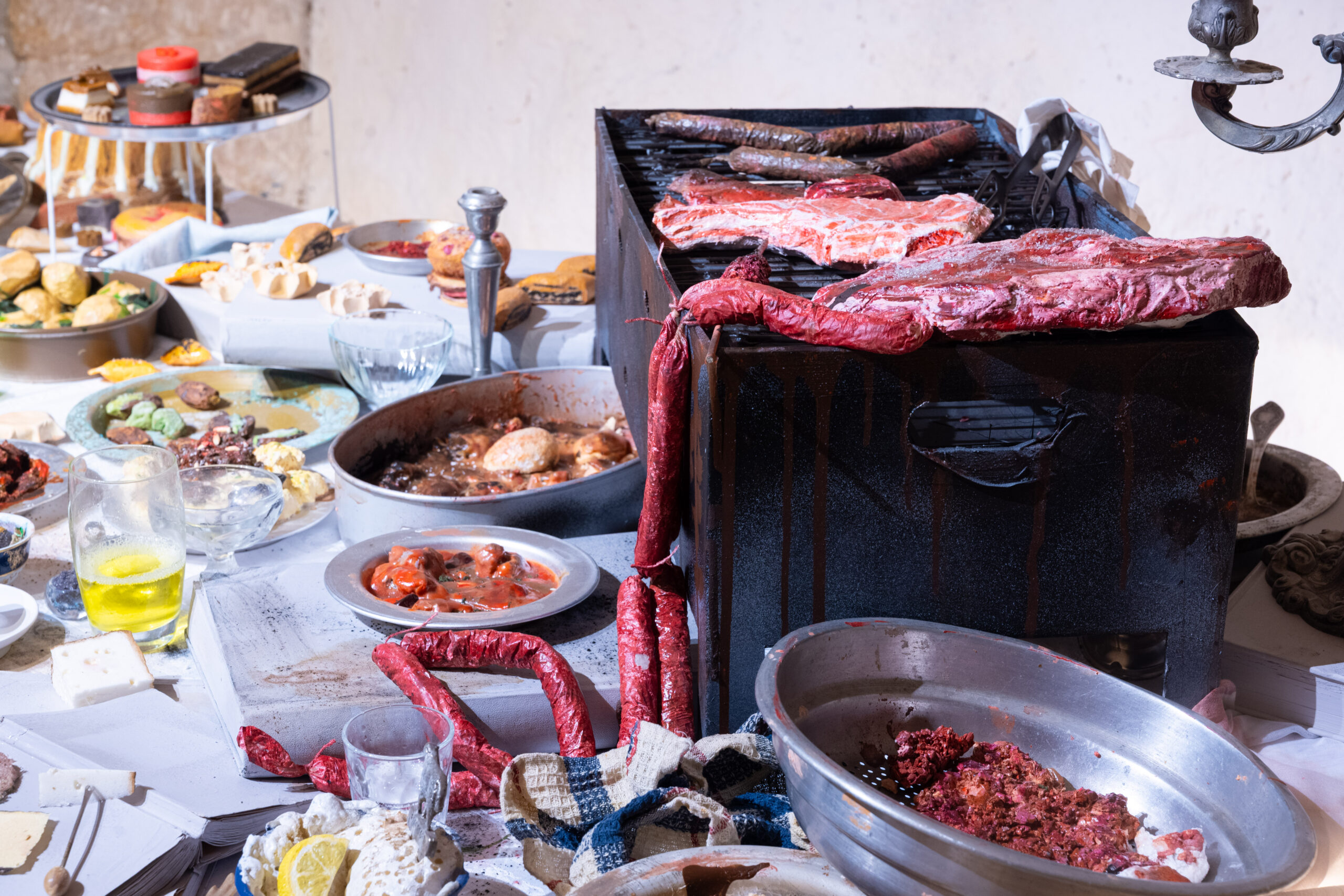
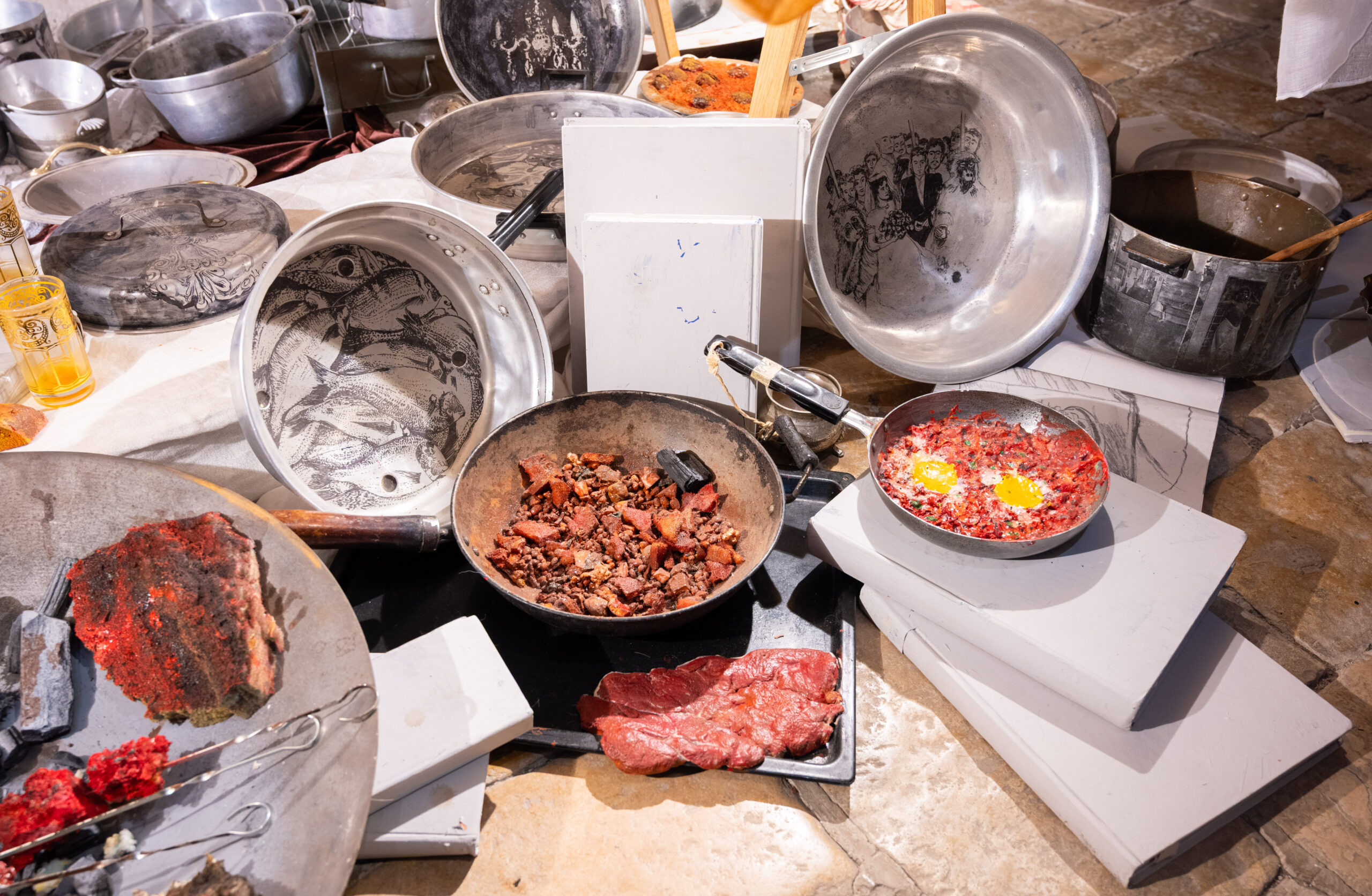
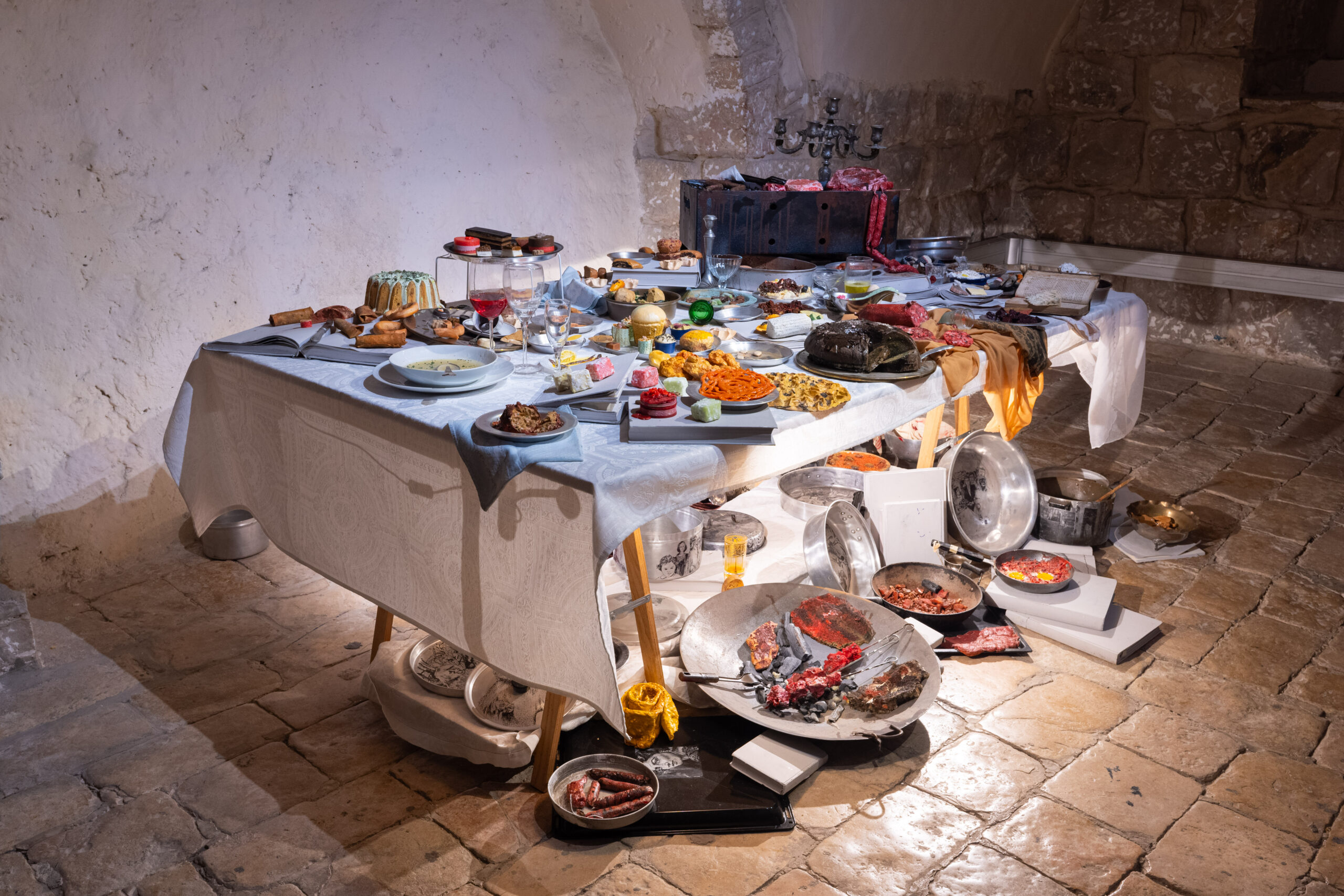
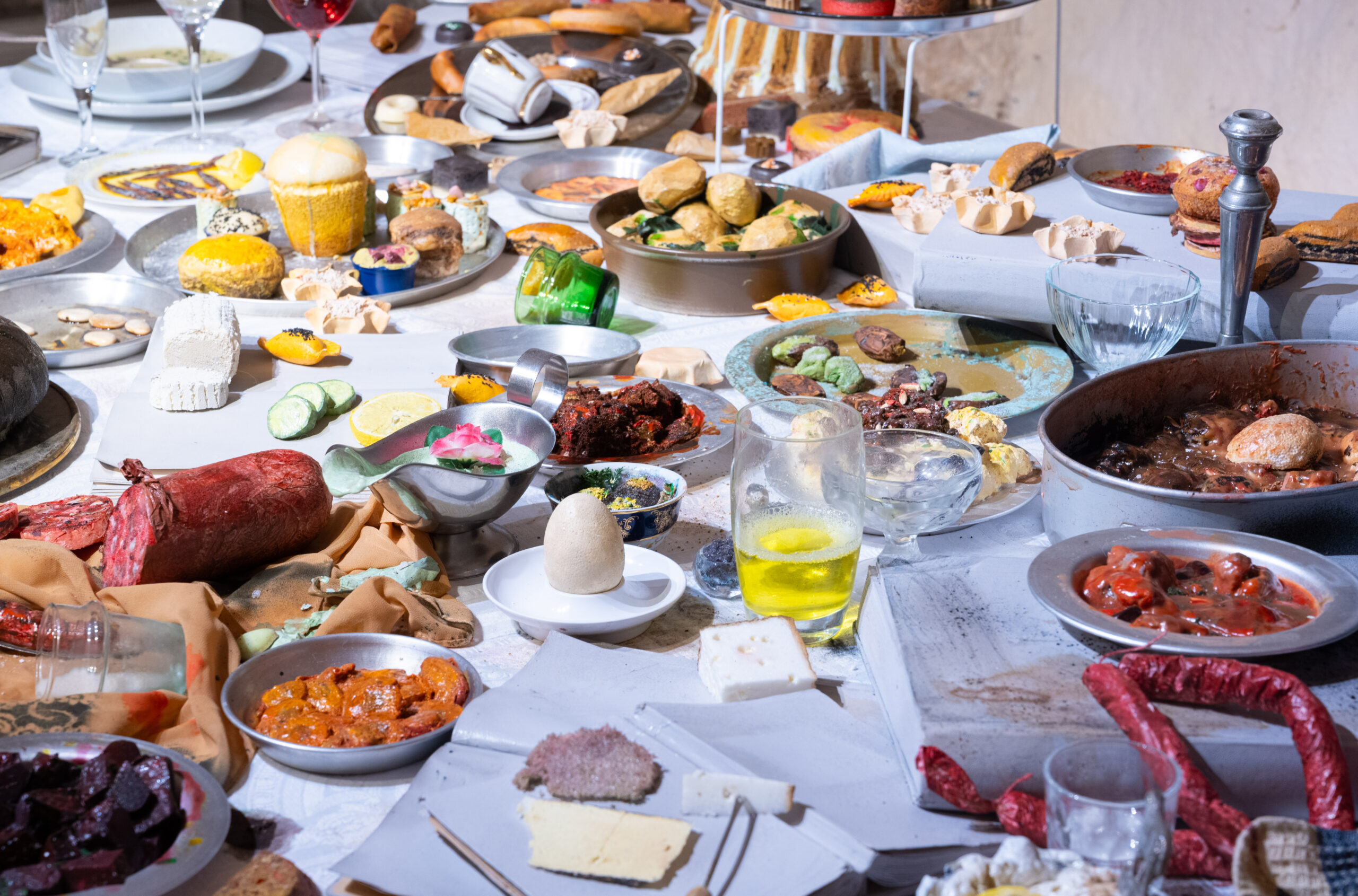
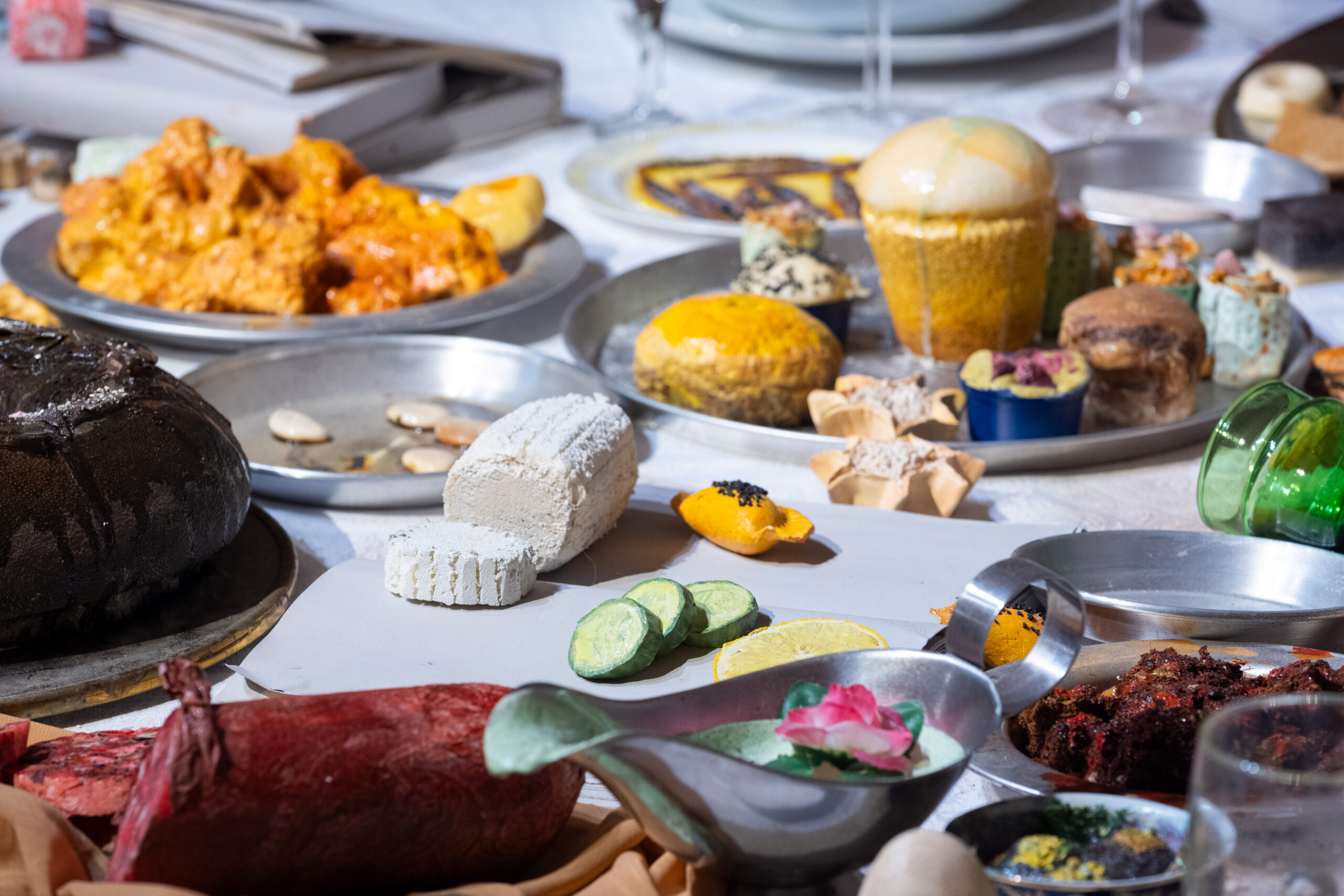
The table in Fake Food, overladen to the point of bursting, evokes millions of meals cut short in an instant. The moment in which children, old people, men and women living in the house left everything behind and ran in panic to save their lives. Perhaps a short time afterwards they returned and completed their meal, or maybe this is their final memory of their now-destroyed home. Maybe an invader entered the room, tasted some delicacies, liked some, threw others away in disgust, or maybe someone chose to live in the house instead of its original owners.
The Sabbath meal we left on the table when we ran, horrified, to the public shelter, aroused in me a bitter mix of hasty departures: my friends the asylum seekers, who fled the Sudan in fear of their lives, mingled with fears from the cursed morning of October 7th , from “flattened” Gaza, with soldiers who told how in 1948 they enjoyed coffee in the finjan still hot on the fire and the fresh pitas prepared by the Palestinian village women, when suddenly, the pogrom in Ukraine during which my mother war born jumped into the mix.
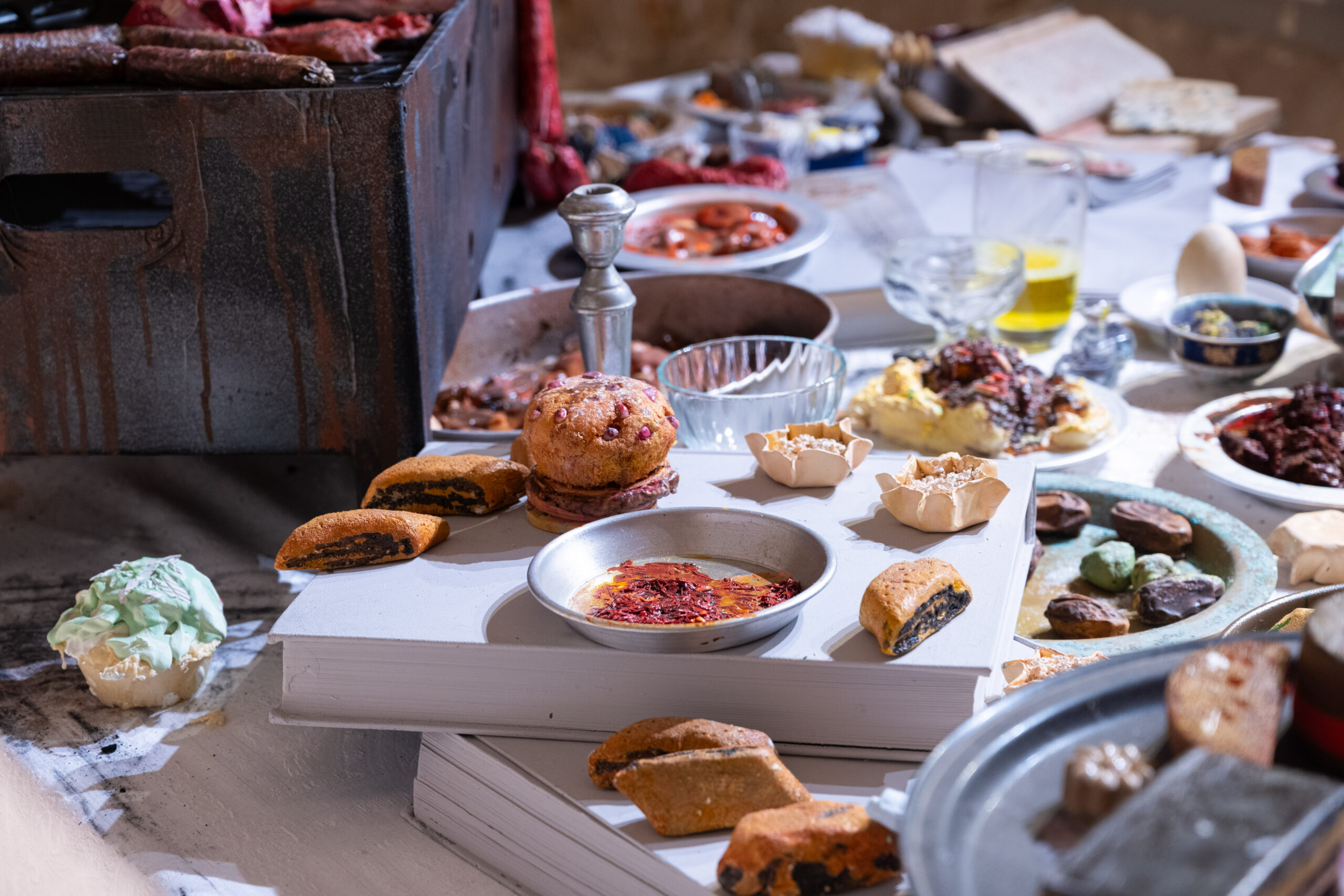
At first, Reuven sculpted cookies like the ones his mother used to bake in Algeria. They were so similar to the original that he felt like eating them. The act of recreation was dappled with humor, and relatives were invited to share culinary comments and memories, to take active part in a kind of research into the extended family’s archive.
As a child, Reuven liked to sit near his mother and observe her baking, cooking, and frying while chatting with her. Without conscious awareness he absorbed her hand motions, the rhythms, how she pricked the dough with a fork or pinched it to create textures, rolling it and cutting out forms and everything involved with the art and craft of her cuisine. I remember how enraged I became the first few times I saw Reuven’s family enjoying his mother’s handmade cookies, wondering how they could devour such beauty in which so many hours of work were invested, as if they were eating just a biscuit manufactured by Osem.
When Reuven began to sculpt the traditional cookies, he discovered that he was in fact recreating his mother’s art that he had assimilated. The inedible cookies were not only a formal replication but were transformed into creation and conservation of a world lost to him when she passed away.
While working on the installation, the dining table became more and more overloaded, chaotic, and bizarre, overflowing underneath and outside of the table. To the warm nostalgia of his mother’s household was added the pain and fury intertwined in his family and personal history: the colonialism that Frenchified the family; the Vichy regime’s laws that put an end to his mother’s attending the school she so loved; being torn from their birthplace, Algeria; emigration to Marseilles; immigration to Israel and wars everywhere, lasting even now. In the heat of current events, it seems that were it not for the limits placed by the size of the table and the space underneath it, the installation could have overflowed even more.
Tamar Verete-Zahavi, March, 2026
Mamuta Art and Research Center | Artistic Director: Lea Mauas | Projects Manager: Or Mai | | Assistant Producer: Or Aloni | Mounting: Itamar Mevorach | Lighting: Eitan Haviv | Hebrew Editing: Ronit Rosenthal | Arabic Translation: Anwar Ben Badis | English Translation: Y. Appleton | Graphic Designer: Maya Shleifer