Gil Yefman
Curator: Dveer Shaked
16.10.26 - 15.01.27
The word “leprosy” evokes many associations, almost all of them negative. Wounded, scarred skin is interpreted as a mirror of the soul and its afflictions, an outward projection of an interior that both repels and attracts. Rot, pus, and exposed nerves draw furtive glances. Fear of contagion mingles with the urge to draw closer and see. Hansen House was built in the nineteenth century as a hospital for patients with Hansen’s disease. The disease is linked to biblical leprosy only loosely, not in medical reality, yet the building became known as the “Leper House.” Shunned and cut off from society, the patients at Hansen House found a home, a community, work, and leisure. They lived together, forging intergenerational and interfaith friendships and leading a full social life, though always behind walls. Those who grew up in Jerusalem while the hospital was active remember sneaking up to its walls, trying to peek over them at the hidden, tantalizing world within. The stigma attached to the place and its residents cut it off from the city and the world beyond. This isolation divides and fences off, but it also offers a place of inner calm and a refuge from the society outside.
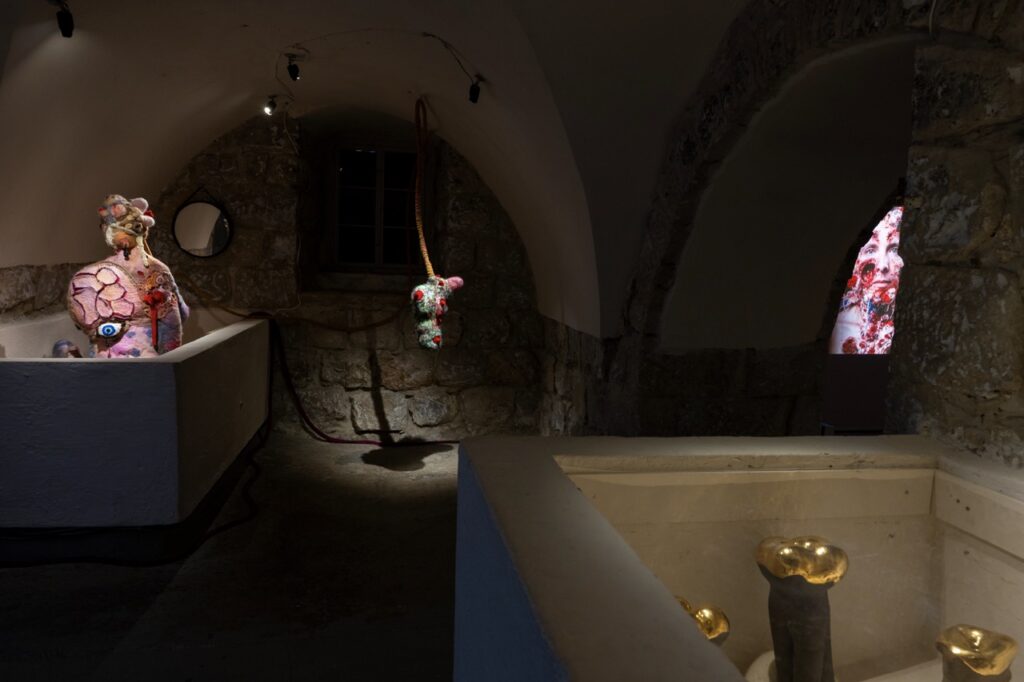
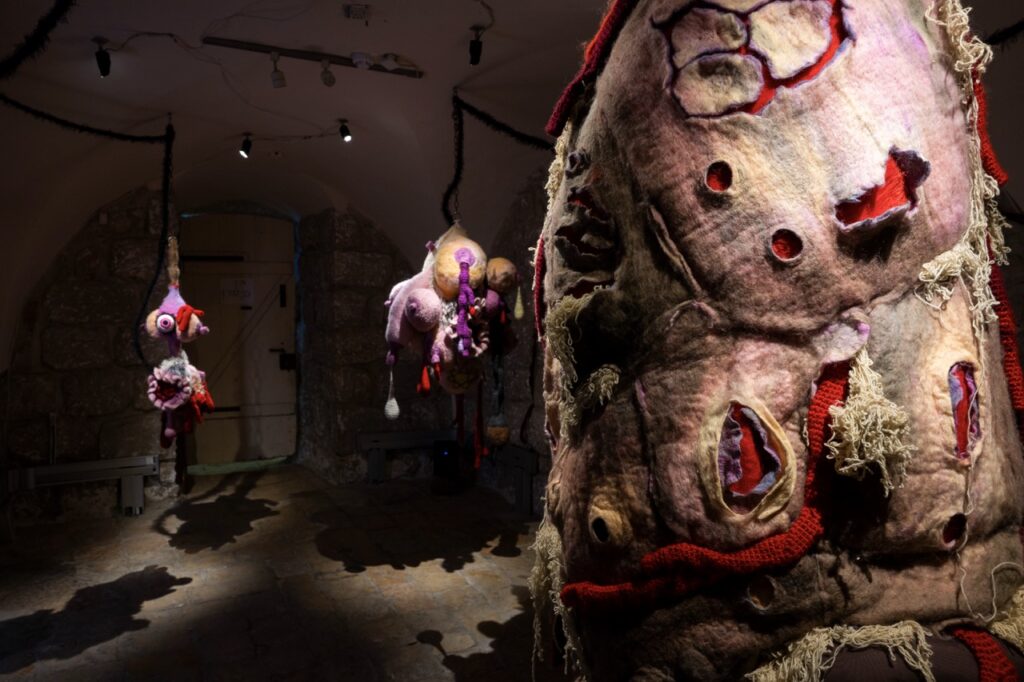
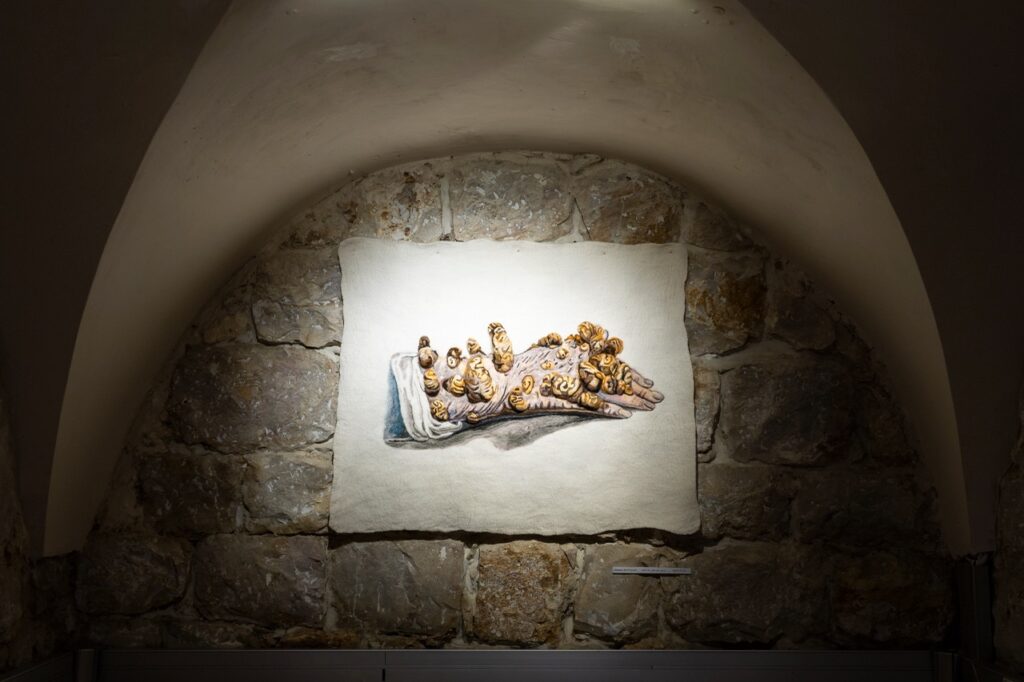
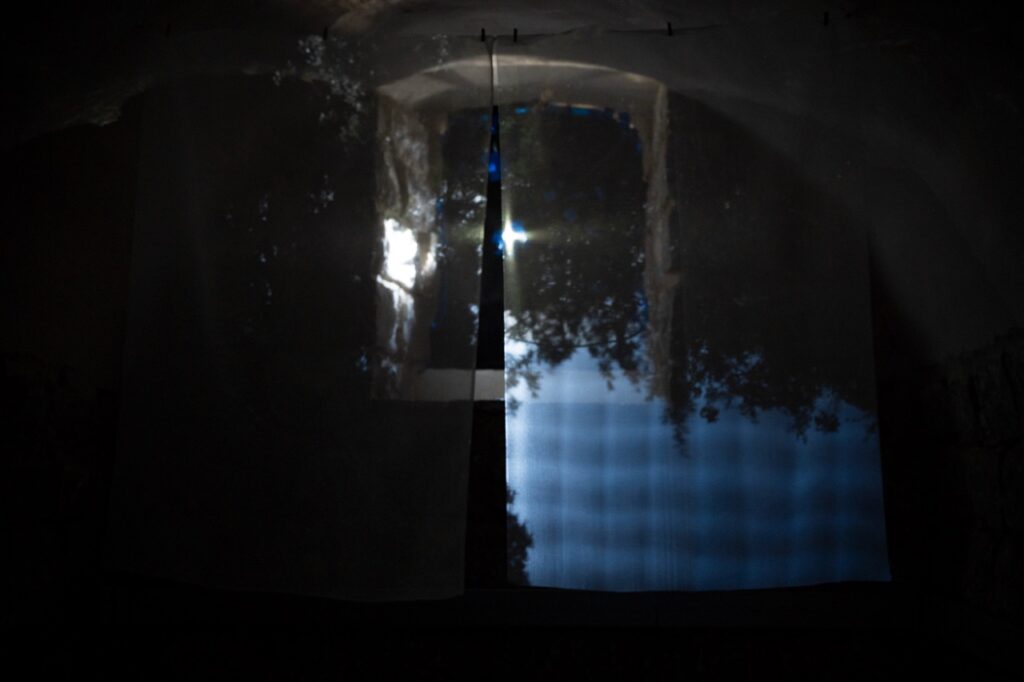
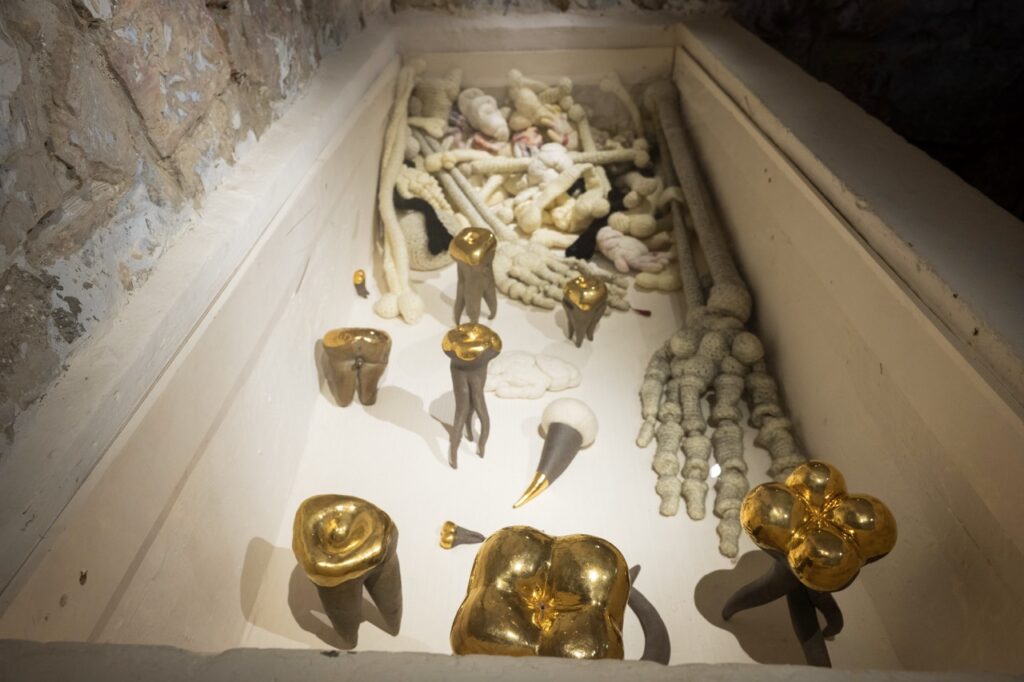
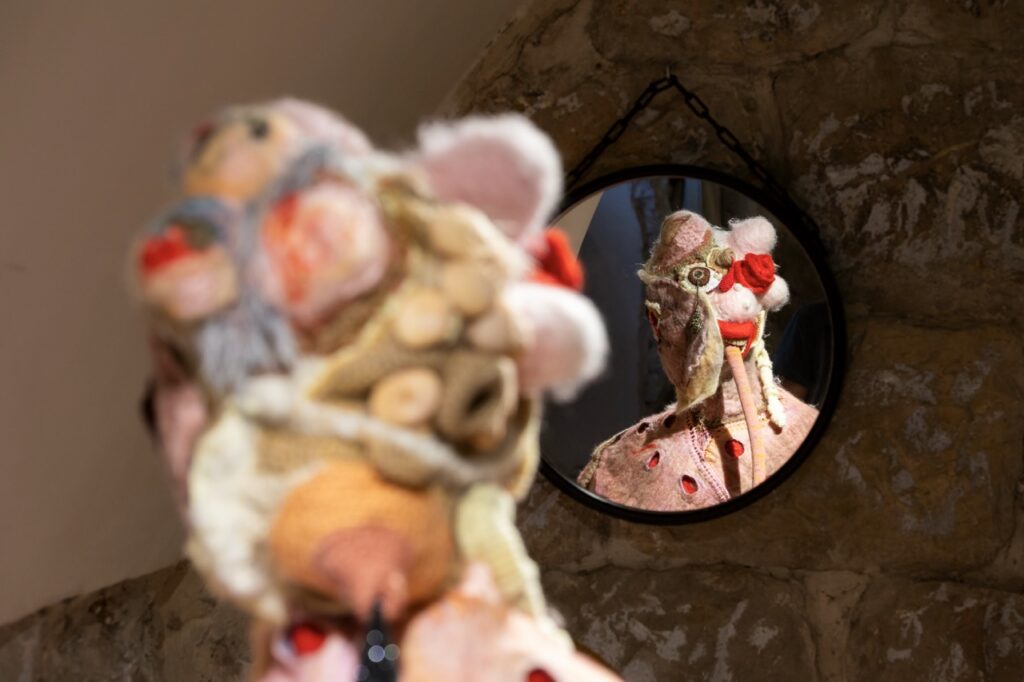
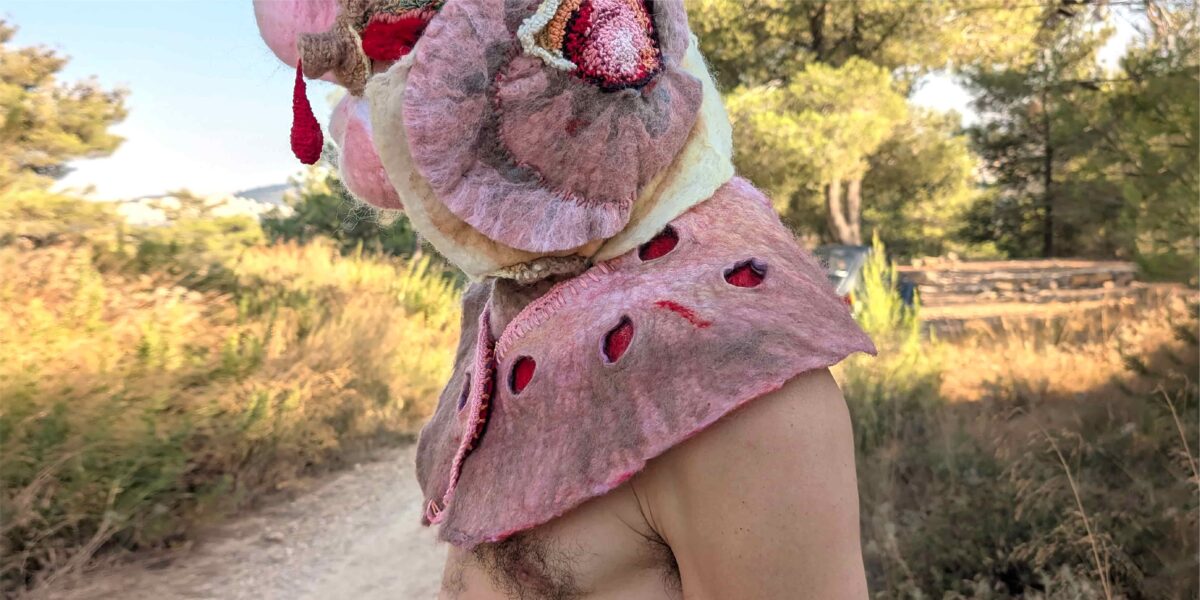
Gil Yefman’s works walk this fine line, moving between the alluring and the repulsive, between compassion and fear, and entwining the two. His soft sculptures, sound installations, felt pieces, two-dimensional works, and a video work made with the help of artificial intelligence engage with the human body in its many forms, from extreme states to everyday ailments. The works hold the eye. The soft wool yarn and felt invite touch, despite, or perhaps because of, the open wounds and bleeding limbs, and they offer the wound itself as a space to linger, think, and even find solace and healing. Previous exhibitions at Mamuta and the Hansen House gallery have explored this tension. This exhibition continues and deepens that tradition. Newly made works join earlier pieces to tell the story of the house.
Every society and every era has its own lepers. Throughout history, leper colonies have been built and dismantled across the globe, and today, too, there are those who are cast out and shunned. Society is more fractured than ever, both locally and globally, with various groups within it attacked and isolated. In Yefman’s work, skin lesions, perforations, and shifting forms become abstract landscapes and a metaphor for society itself. The pull and recoil that accompanied Hansen House since its founding, the wish to peer behind its walls, mingled with the fear of what goes on inside, are present in the exhibition space. Images and narratives from the Hansen House archive and the building itself, including its dimly lit basement, serve as inspiration and a starting point, raising questions about the “lepers” of our time and the feelings that arise in us when we face them, and when we face ourselves.
Gil Yefman’s Exhibition Offers Healing to the Outcast, Gilad Meltzer, November 2026, Haaretz
: