Rachel Hagigi
Curator: Sala-Manca
10.04.26 - 26.06.26
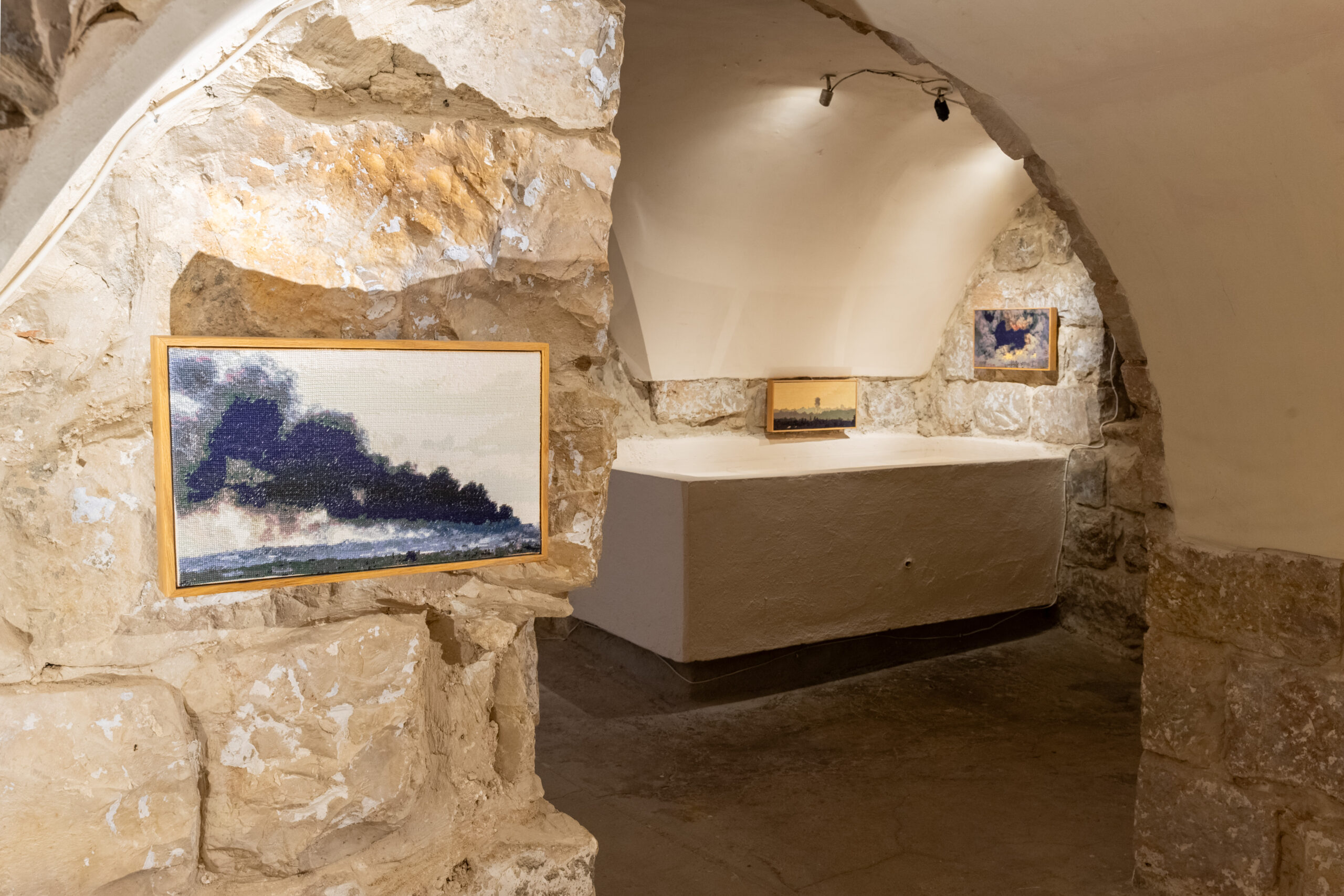
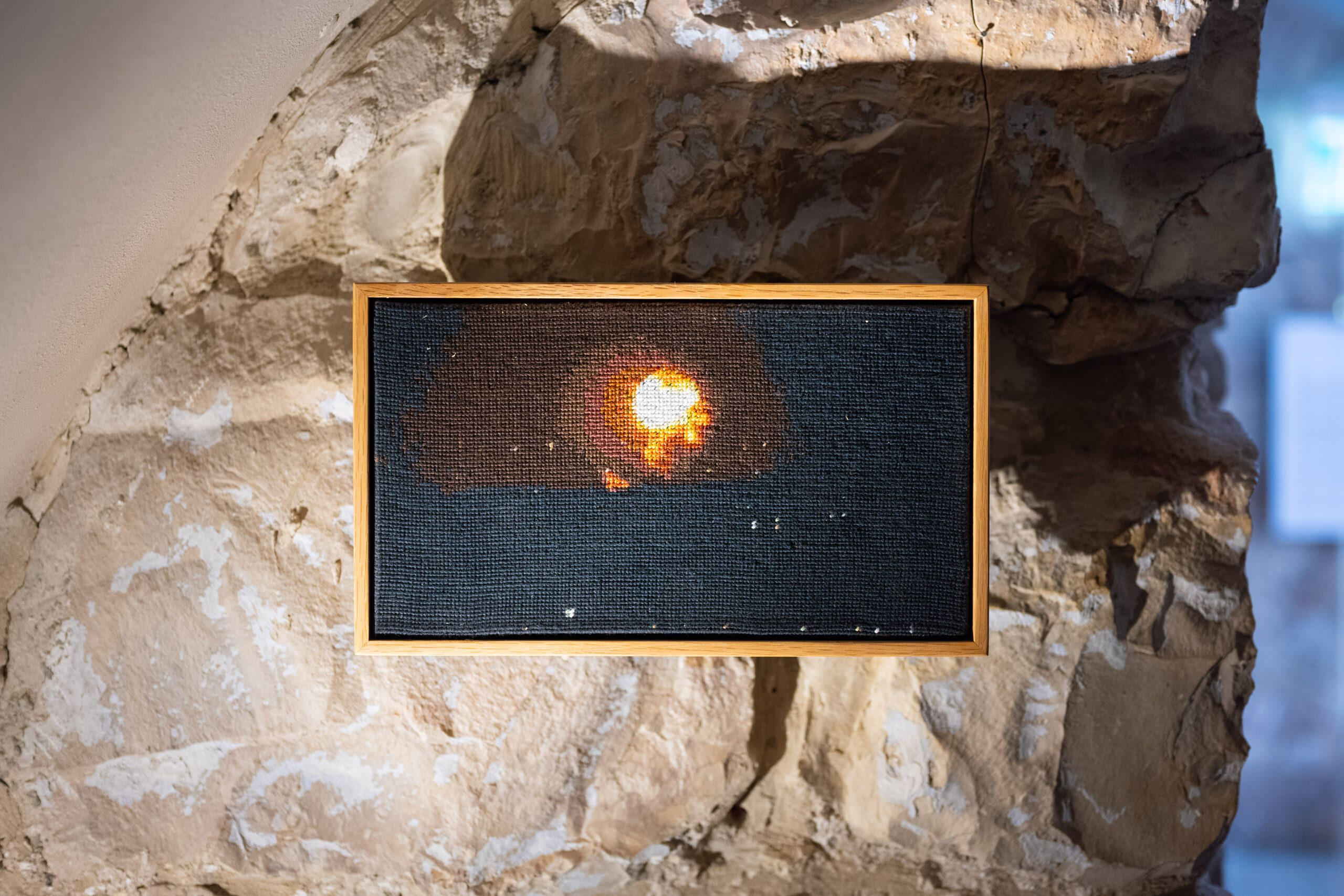
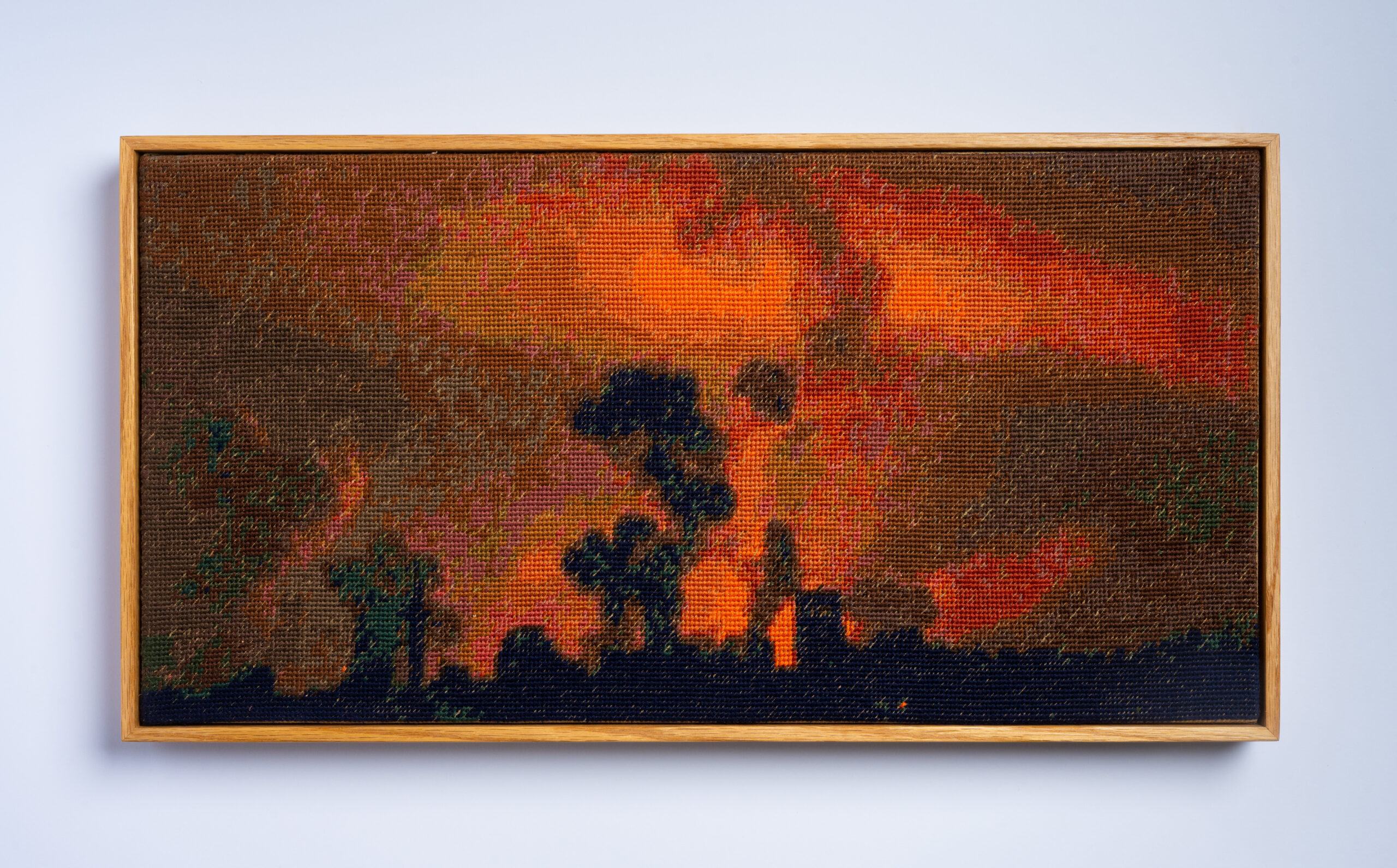
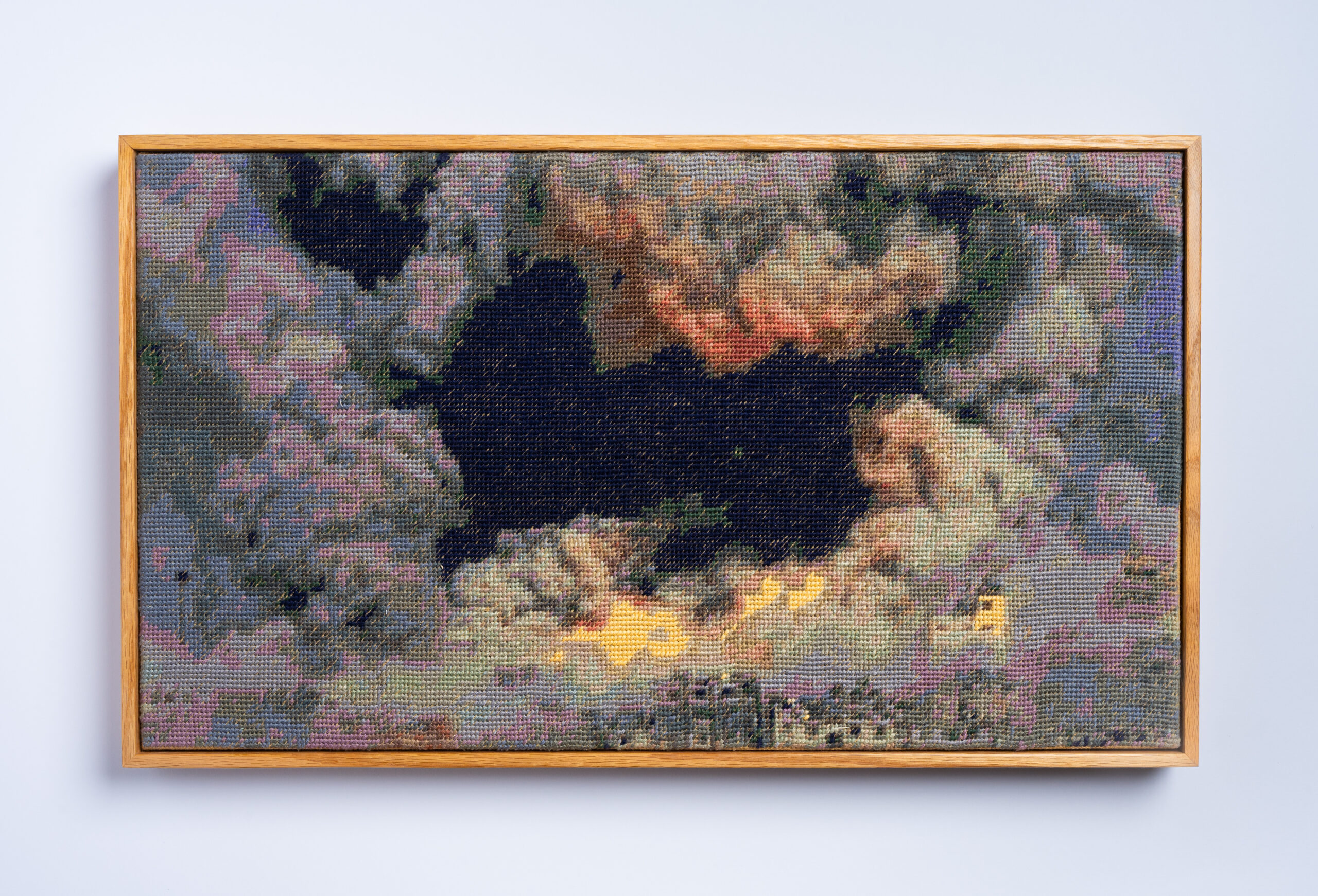
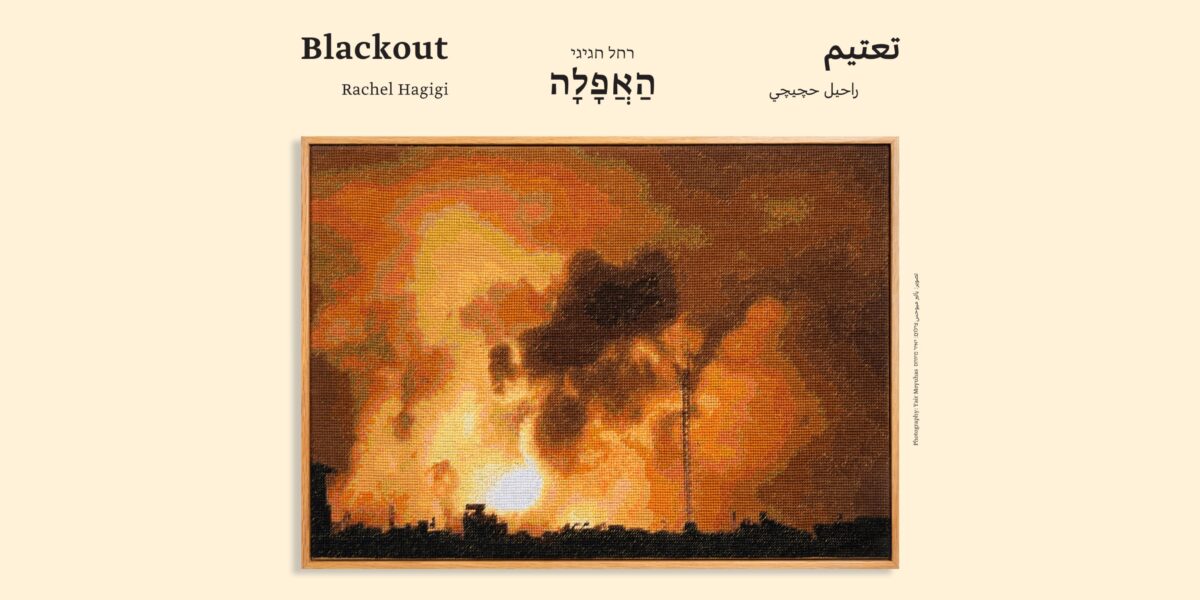
The exhibition Blackout, is comprised principally by 11 tapestry-style embroidery works (gobelin). What they all share is that they are based on press photographs of bombings in Gaza—a translation of the photographer’s direct, immediate testimony into a work stitched over weeks or even months. Hagigi has been embroidering since October 2023. Some works are based on documentation of bombings following the October 7th massacre; others are based on photographs from military operations in previous years.
The works are Hagigi’s response to destruction, killing, and erasure. The translation into embroidery allows for meditation through artistic creation. Technically, after selecting the image, the first step is “pixelating” the photo so it can be embroidered onto a grid; then, the embroidery begins, divided into colors. At first, only patches of color emerge, and only after weeks of labor does the image become clear. Hagigi developed her self-taught technique through trial and error, with deep attention and a devotion of time to each piece—contrasting with the split second it takes to capture a journalistic photo, or the military act of flattening a building and its inhabitants.
Hagigi’s embroidery is both a therapeutic act for her and a gesture that places both her and us before the destructive moment of the explosion. She does not show the aftermath of the bombing, but only the moment of the blast itself. Isolated within a wooden frame, crafted with meticulous care—the explosion is seemingly transformed into a work of art. This dissonance triggers discomfort in the viewer, a kind of “short circuit” between the content of the embroidery and the artistic object itself.
While the press photos that served as the basis for these works are scattered across the web—vanishing into the flood of war images and news—Hagigi’s tapestries operate on a different axis. They exist outside of social media and the news cycle, in an artistic space that invites a “delay” or a lingering gaze. Hagigi reveals the image through a symbolic “slow exposure,” an act that is the polar opposite of “flattening.” In this contrast lies the aesthetic and political power of the work.
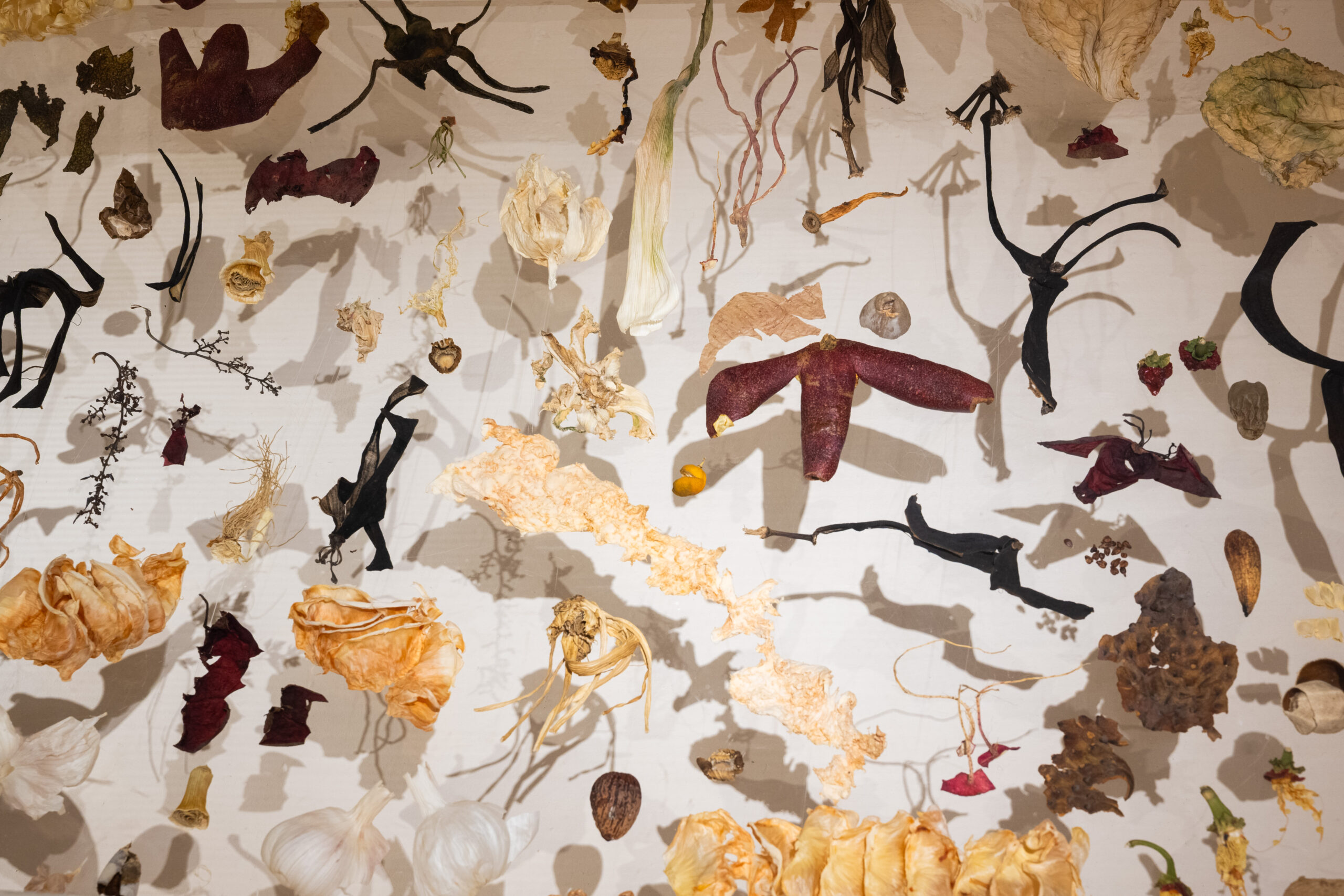
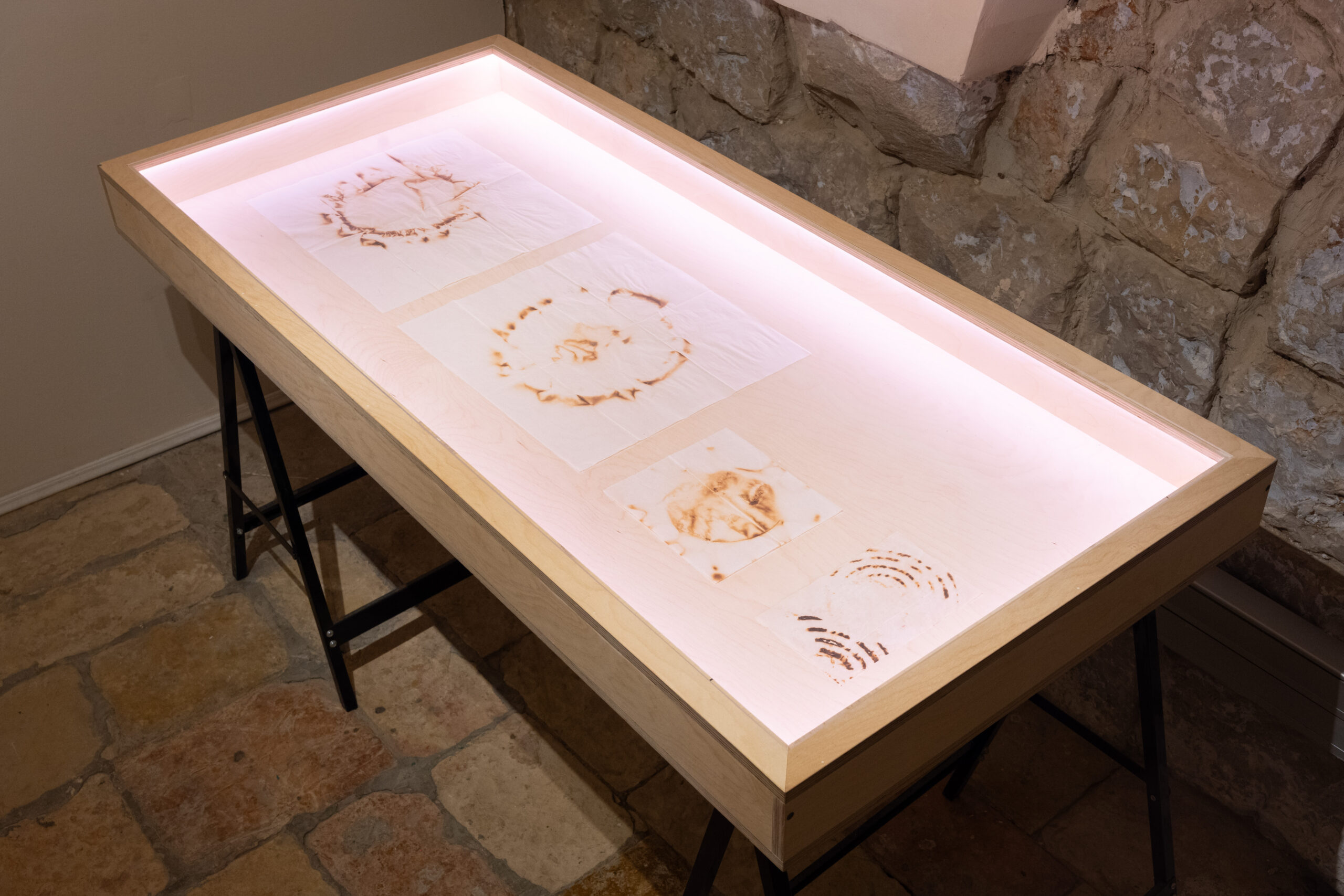
Alongside the embroidery, Hagigi engaged in drying peels, seeds, and baking remains. The parchment paper remains marked, seemingly at random, like abstract paintings of what is left behind from preparing and consuming food—as do the peels and seeds on the table.
Blackout presents a poetic act of resistance within the domestic space. The unfathomable gap between the art Hagigi creates—the result of meticulous attention—and the havoc wrought by war invites us into a space of suspension and understanding. These are compositions of presence and absence, of what exists and what is missing. Who by fire and who by hunger?
Mamuta Art and Research Center | Artistic Director: Lea Mauas | Projects Manager: Or Mai | | Assistant Producer: Or Aloni | Mounting: Itamar Mevorach | Lighting: Eitan Haviv | Hebrew Editing: Ronit Rosenthal | Arabic Translation: Anwar Ben Badis | English Translation: Y. Appleton | Graphic Designer: Nawal Arafat